-
07599 249962
REMINDER! CHANGES TO WASTE & RECYCLING COLLECTION SYSTEM!
REMINDER! CHANGES TO WASTE & RECYCLING COLLECTION SYSTEM!
EFDC AREA
11/03/2026
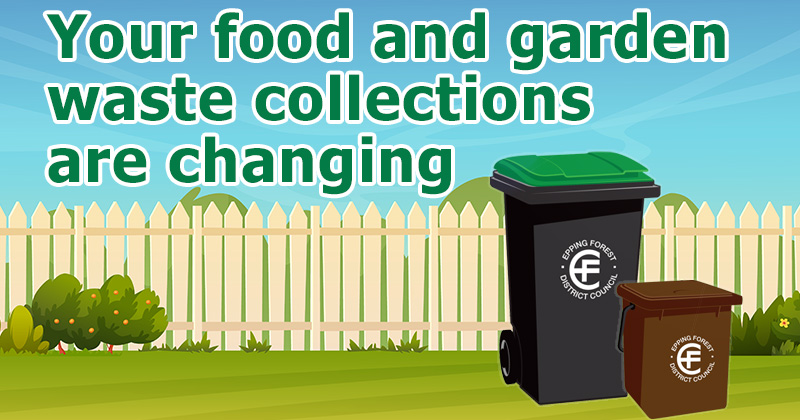
Don’t forget that from Tuesday 31 March 2026, your food and garden waste will be collected separately.
Your final mixed food and garden waste collection will take place between Monday 23 and Friday 27 March.
Separating food and garden waste
After your final combined collection, food and garden waste will need to be separated into the correct containers.
Food waste must be placed in the kerbside caddy and will be collected weekly. Garden waste will be collected in the green-lidded bins fortnightly, only from households who have signed up to the new subscription service.
Do not put food or garden waste in your blue-lidded recycling or black refuse bin, this will be classed as contaminated and your bin will not be collected until the contamination is removed.
Garden waste subscription
We have had 4,104 subscribers sign up already.
The subscription is optional. Those who opt-in will be sent a permit sticker for their green-lidded bin as proof of paid subscription. The permit will have their address and unique reference number printed on it. Garden waste bins without a corresponding permit will not be collected.
For those who wish to not to subscribe, you can:
- Try home composting
- Pay for a private contractor to collect it
- Take it to an Essex County Council recycling centre
Food waste caddies
The food caddies continue to be delivered to households across the district.
Delivery of the caddies is being done in stages over the next few weeks.
Why is the change being introduced
Epping Forest District Council is the last council in Essex to collect food and garden waste together.
Separating the 2 waste streams will:
- Avoid significantly higher processing and disposal costs charged by Essex County Council
- Support the government’s simpler recycling rules, which place greater emphasis on separating food waste from other waste
- Align the district with neighbouring councils in preparation for local government reorganisation (LGR)
Separating food waste also improves recycling quality and helps ensure it can be turned into something useful, such as energy or compost.